Many business owners find digital marketing hard to understand and hard to forecast. You spend money on ads, post on social media, and write articles, yet leads and sales don't always come in. Most of the time, the missing link is a well-structured digital marketing funnel.
A marketing funnel isn't simply an idea; it's a way to turn strangers into devoted consumers. When you understand it and use it appropriately, it makes things clear, consistent, and measurable growth.
We'll explain the marketing funnel in simple terms in this tutorial and show business owners how to use it to get more leads, close more sales, and grow their revenue.
🔍 What Is a Digital Marketing Funnel?
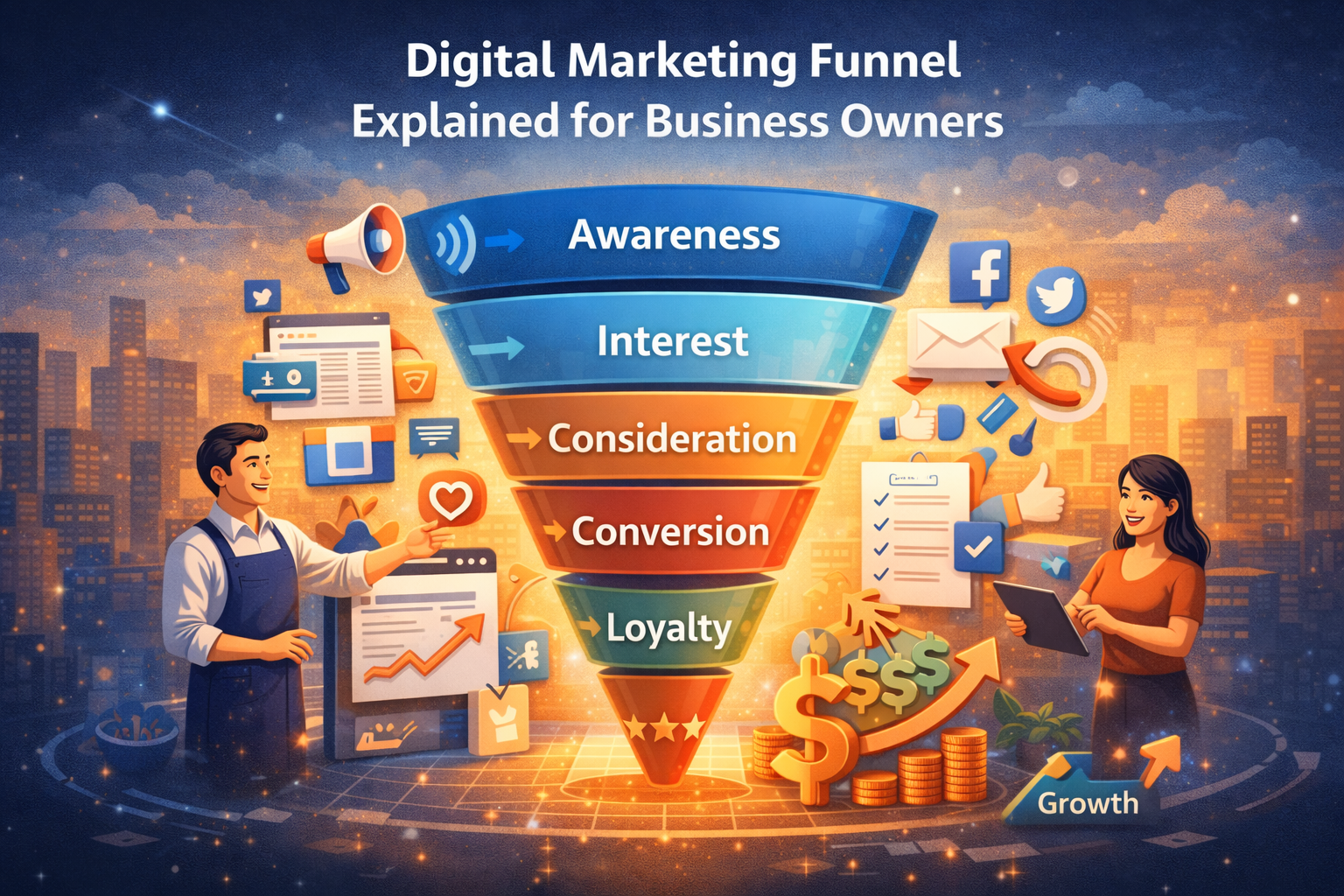
A digital marketing funnel is a series of steps that leads potential customers from finding out about your brand to becoming paying customers and, eventually, committed advocates.
It maps how people:
-
Find your brand
-
Get involved with your content
-
Trust your business
-
Take action
Every business's marketing funnel is made to make things easier and get users closer to making a purchase.
🧠 Why Every Business Needs a Marketing Funnel
Without a funnel, your marketing efforts are all over the place.
A good business marketing funnel can help you:
-
Understand customer behavior
-
Deliver the right message at the right time
-
Improve conversion rates
-
Reduce marketing waste
In simply, funnels help you organize your digital marketing plan funnel.
🧩 The Core Marketing Funnel Stages
Most funnels have defined stages that show how to promote. Let’s break them down.
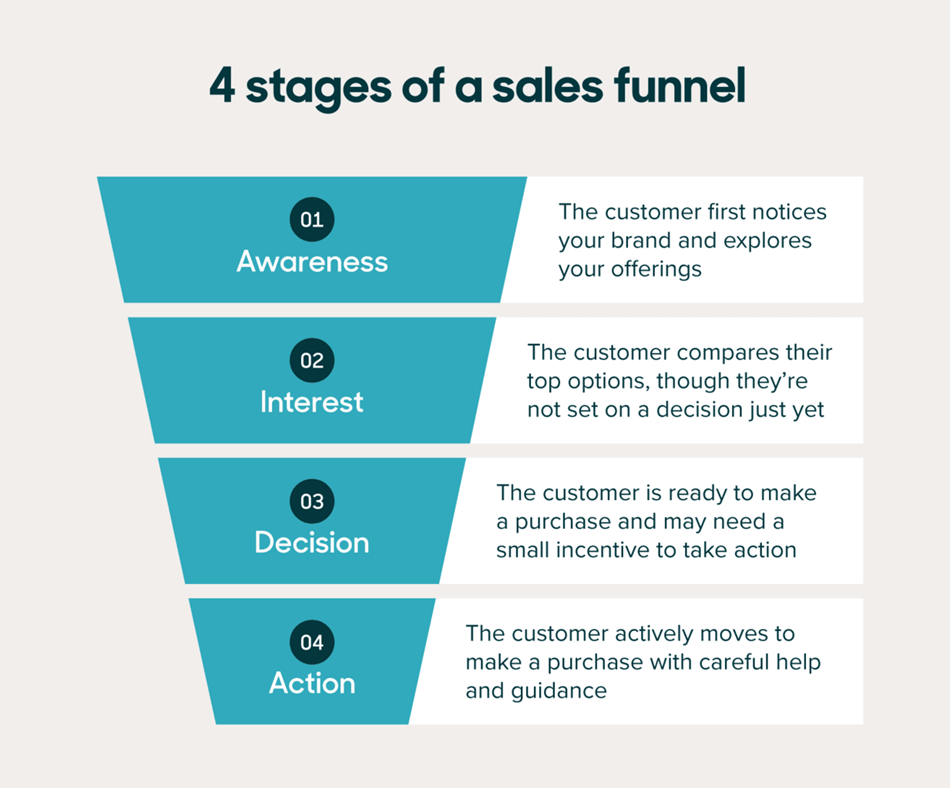
👀 Stage 1: Awareness (Top of the Funnel)
People first learn about your business here.
At this point, your goal is to be seen, not to sell.
Channels include:
-
SEO and blog content
-
Social media
-
Paid ads
-
YouTube and videos
This step fills your web marketing funnel and gets people to know about your brand.
🎯 Stage 2: Interest & Lead Generation
Once users know you exist, the next step is capturing their interest.
This is where the lead generation funnel comes into play.
Examples:
-
Free guides or ebooks
-
Newsletter sign-ups
-
Free tools or consultations
A well-built digital lead generation funnel collects contact details so you can continue the conversation.
🤝 Stage 3: Consideration (Middle of the Funnel)
Now users are evaluating options.
They compare:
-
Features
-
Pricing
-
Reviews
-
Trust signals
Your content should educate and reassure. This stage is critical in the customer acquisition funnel, where trust is built.
💰 Stage 4: Conversion (Bottom of the Funnel)
This is where action happens.
The conversion funnel focuses on:
-
Sales pages
-
Product demos
-
Strong CTAs
-
Limited-time offers
A properly designed digital sales funnel removes hesitation and encourages buying decisions.
🔁 Stage 5: Retention & Loyalty
The funnel doesn’t end with a sale.
Post-purchase engagement includes:
-
Email follow-ups
-
Upsells and cross-sells
-
Loyalty programs
Retention strengthens your online sales funnel and increases lifetime value.
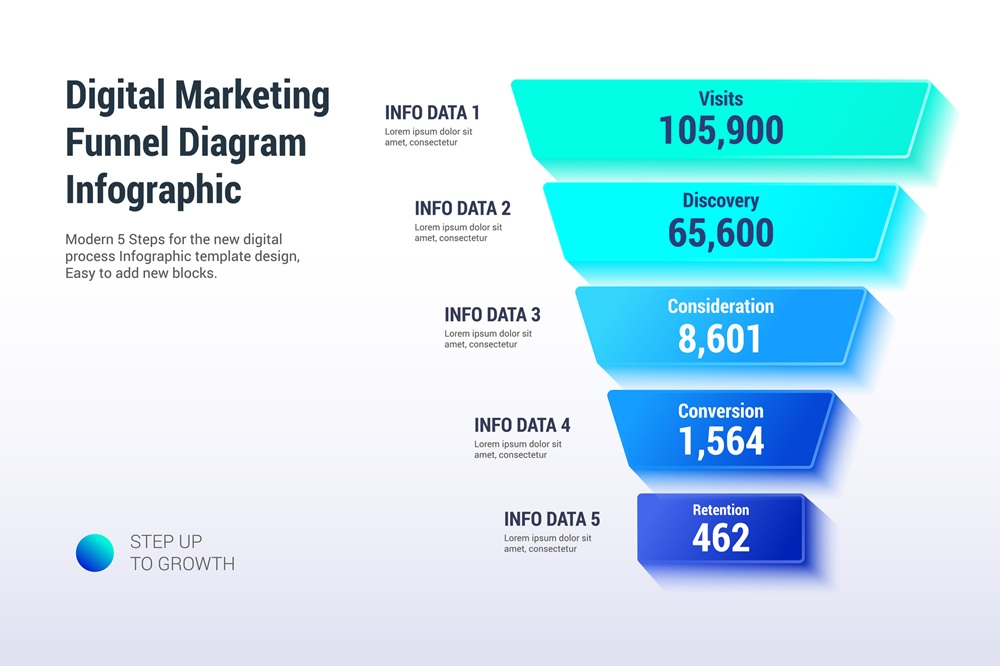
📊 Funnel Optimization: Where Growth Really Happens
Building a funnel is just the beginning.
Funnel optimization focuses on improving each stage by:
-
Reducing drop-offs
-
Improving messaging
-
Testing CTAs and layouts
This is closely tied to conversion rate optimization funnel strategies, which maximize results without increasing traffic.
🛠️ How Funnels Support Business Owners
For entrepreneurs and founders, a sales funnel for business owners provides predictability.
Instead of guessing:
-
You know where leads come from
-
You know why conversions happen
-
You know what to optimize
Funnels turn marketing into a repeatable system.
🌐 Digital Funnels vs Traditional Sales Methods
Unlike traditional marketing, a digital marketing funnel works 24/7.
Benefits include:
-
Automation
-
Scalability
-
Data-driven decisions
A strong online marketing funnel adapts quickly to customer behavior and market trends.
🚀 Using Funnels for Long-Term Business Growth
Funnels are not just for selling—they’re for growth.
A well-structured marketing funnel for businesses helps you:
-
Launch new products
-
Enter new markets
-
Scale operations efficiently
This makes funnels a core part of any modern digital marketing strategy funnel.
⚠️ Common Funnel Mistakes to Avoid
Many businesses fail due to:
-
No clear funnel structure
-
Weak lead magnets
-
Poor follow-up
-
Ignoring analytics
Avoiding these mistakes strengthens your digital marketing funnel and boosts ROI.
✅ Final Thoughts
Understanding the digital marketing funnel is one of the most important skills a business owner can develop.
From awareness to conversion, funnels align marketing efforts with real customer journeys. When built and optimized correctly, they become powerful growth engines—bringing consistent leads, higher conversions, and predictable revenue.
In today’s competitive digital space, businesses without funnels fall behind. Those with optimized funnels lead the market.
❓ FAQs
Q1. What is a digital marketing funnel?
A digital marketing funnel is a system that guides users from awareness to conversion using structured marketing stages.
Q2. Why is a marketing funnel important for businesses?
It brings clarity, improves conversions, and helps businesses scale marketing efforts efficiently.
Q3. How many stages are in a marketing funnel?
Most funnels include awareness, interest, consideration, conversion, and retention stages.
Q4. Can small businesses use digital marketing funnels?
Yes, funnels are highly effective for small businesses to generate leads and grow consistently.
Q5. What is funnel optimization?
Funnel optimization involves improving each funnel stage to increase conversion rates and ROI.