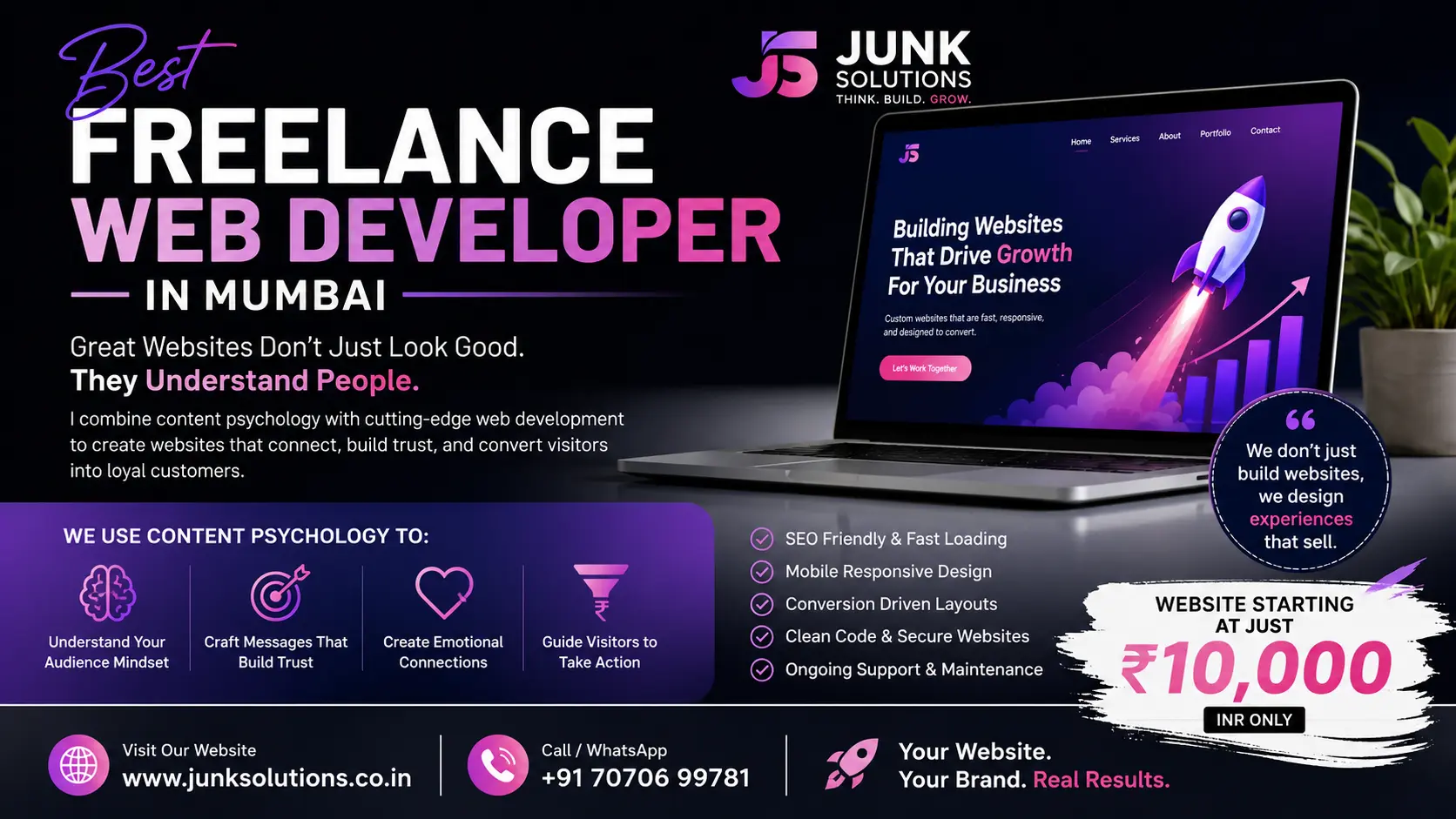
From Finance Hub to Tech Powerhouse
Mumbai has always been the financial heartbeat of the country, but recently, it has evolved into a massive tech and startup powerhouse. With massive co-working spaces and incubation hubs popping up across Powai and Malad, the city is a breeding ground for global-scale innovation.
Because of this shift, consumer expectations are sky-high. Local buyers don't have the patience for slow, generic websites. They expect lightning-fast, intuitive digital experiences. If your current site can't keep up, you are silently bleeding revenue every single day.
When you hire a solid local developer, you get someone who understands this high-octane ecosystem. They know how to build custom apps that scale, they know which payment gateways Indians actually trust, and they understand the local demographic.
Freelancer vs. Web Development Agency
This is usually the first big hurdle. Do you go with an independent freelancer or a full-scale agency? It really comes down to the size of your project.
The Case for an Independent Coder
If you’re a small to medium-sized business looking to move fast, a freelancer is usually the smartest financial move. They don't have the massive overhead of an agency with a physical office in a premium pin code, and those savings get passed down to you. You essentially get high-level coding skills without the corporate price tag.
Plus, you get direct access. There are no account managers or sales reps acting as middlemen. If you need a headline changed, a freelancer can usually knock it out in minutes. They are also notoriously adaptable, often working odd hours to hit tight launch deadlines.
When You Actually Need an Agency
If you’re building something massive—like a multi-platform app or an enterprise portal handling highly sensitive financial data—a single freelancer is going to get overwhelmed. A reputable web development company brings a safety net: dedicated UI/UX designers, backend architects, and QA testers all working together to ensure the platform doesn't collapse under pressure.
What Does It Actually Cost in 2026?
Pricing is easily the most confusing part of this process. You might get one quote for ₹20,000 and another for ₹2 Lakhs for what sounds like the exact same website.
The reality? You get what you pay for. The ultra-cheap options are usually stolen templates with zero cybersecurity and no post-launch support. You aren't just buying a digital brochure; you are investing in a business asset.
Here is a realistic look at 2026 pricing tiers:
-
Basic Business Website (5-7 pages): ₹15,000 to ₹35,000. This gets you a clean, mobile-responsive design and basic contact forms.
-
Strategic Lead-Gen Site: ₹40,000 to ₹70,000. This includes custom UI/UX, proper CMS integration, and pathways designed to convert visitors into leads.
-
Custom Web Apps & Enterprise Platforms: ₹1,00,000 to ₹5,00,000+. This is for complex features, bespoke architecture, and serious scalability.
The Hidden Costs
Don't let the initial quote fool you. When reviewing proposals, keep an eye out for the recurring costs:
-
Domain Registration: ₹800 to ₹2,000/year.
-
Cloud Hosting: ₹3,000 to ₹20,000/year depending on server needs.
-
Monthly Maintenance: ₹2,000 to ₹5,000/month for security patches, plugin updates, and backups.
Skills to Look For
"Developer" is a massive umbrella term. You need a strategic problem-solver, not just someone who knows how to install a WordPress theme. Dig into their tech stack—are they using React for the frontend? Node.js or Python for the backend?
You want someone who understands both sides of the coin. The frontend is all about user experience (UX)—mapping out the exact path a visitor should take to buy your product without friction. The backend is the engine room. If a developer only knows how to make a site look pretty, it will crash the second you get a spike in traffic. You need solid database structure and cybersecurity, especially if you are handling customer data.
Why Custom Builds Beat Templates
The era of cheap, bloated templates is over. Templates are built to appeal to thousands of different businesses, meaning they are packed with features you will never use. All that extra code just slows down your page load speed—and Google penalizes slow websites heavily. Plus, if your business pivots and you need a custom feature, a rigid template will usually just break.
For growing brands and startups, custom development is non-negotiable. Every pixel is written specifically for your business logic, resulting in a lean, fast, and entirely unique platform that reduces your manual workload.
Selling Online? The Rules Change
E-commerce is a totally different beast. If you are selling online, you need an e-commerce developer who deeply understands payment security and complex product catalogs.
A custom Shopify build generally runs from ₹30,000 to ₹80,000, while a custom e-commerce web app can hit ₹1,00,000 to ₹5,00,000.
Mobile-First is Mandatory: Look around the local train—everyone is on their phone. If your site isn't flawless on a mobile screen, you will lose sales. Buttons must be thumb-friendly, checkouts must be frictionless, and trusted local payment gateways (like Razorpay or UPI) must be integrated seamlessly.
The Ultimate Hiring Checklist
There is a huge advantage to hiring locally. Meeting face-to-face in an Andheri cafe builds a level of trust and accountability that Zoom calls just can't match. Local developers care about their reputation in the Mumbai tech community.
Before you hand over any money, run through this checklist:
-
Check Live Portfolios: Don't accept PDF screenshots. Open their recent live websites on your phone and test the speed yourself.
-
Verify Local References: Ask to speak directly with their past clients in Mumbai.
-
Lock Down Ownership: Your contract must explicitly state that you retain 100% ownership of the domain and source code once the final payment is made.
-
Discuss the Worst-Case Scenario: Ask what happens if the site breaks a month after launch. Ensure they offer a clear maintenance retainer.
-
Talk SEO Upfront: Make sure basic technical SEO (like clean HTML and proper image compression) is included, not treated as a surprise add-on later.
Take your time. Ask the hard technical questions. Prioritize long-term value over the absolute cheapest price, and you'll find a partner who builds an automated growth machine for your business.