If you are a single-subject teacher—perhaps spending your days breaking down the complexities of quantum physics or mapping out intricate organic chemistry reactions for competitive exam aspirants—you already know that the world of education has fundamentally changed. The days of relying entirely on a rented classroom, local notice boards, and word-of-mouth recommendations from neighborhood parents are fading fast. We are firmly in the digital age, and the educational landscape in 2026 is brutally competitive, entirely borderless, and relentlessly fast-paced.
Today, when a student struggles with a specific academic concept, their first instinct is not to ask their school teacher or look for a flier on a local street corner. Their immediate reaction is to pull out their smartphone and search Google or YouTube. They are looking for instant, authoritative, and clear solutions. If you do not have a robust, highly visible digital home base where these students can find you, you are essentially invisible to the vast majority of your potential market. You might be the most gifted mathematics or chemistry instructor in your city, but if a student cannot easily discover your curriculum, watch your demo lectures, and securely pay for your batches online, they will simply enroll with a competitor who has taken the time to build a proper digital infrastructure.
This is exactly why developing a web presence for a business is no longer just a luxury or an optional marketing tactic for independent educators; it is the absolute core requirement for survival and scalable growth. Relying on scattered social media profiles, WhatsApp groups, or third-party tutoring directories is a recipe for stagnation. To build a sustainable, highly profitable teaching practice that can weather any economic shift, you must own your digital real estate. You need a centralized platform that acts as your tireless receptionist, your dedicated sales team, and your secure digital classroom, all operating seamlessly 24 hours a day, 7 days a week. Establishing this level of sophisticated infrastructure requires moving beyond DIY website builders and partnering with a professional website development company that truly understands the unique mechanics of the e-learning industry. In this definitive, comprehensive guide, we are going to dissect exactly why personal tutors must invest in custom digital platforms, the intricate technical features required to convert casual visitors into dedicated students, and how the right technological foundation will serve as the ultimate catalyst for your long-term success.
The Massive Shift in the 2026 Education Landscape
To understand why a website is so critical right now, we have to look at how student and parent behavior has permanently evolved. The modern consumer of education is highly research-driven. They do not just blindly trust a local recommendation anymore; they cross-reference credentials, read reviews, and demand high-quality digital materials. For an independent tutor, this means your brand is constantly being evaluated against well-funded, massive EdTech corporations. The only way to compete is to present a level of professionalism and subject-matter authority that makes a student feel confident in handing over their tuition fees.
Beyond the Local Classroom: Reaching a National Audience
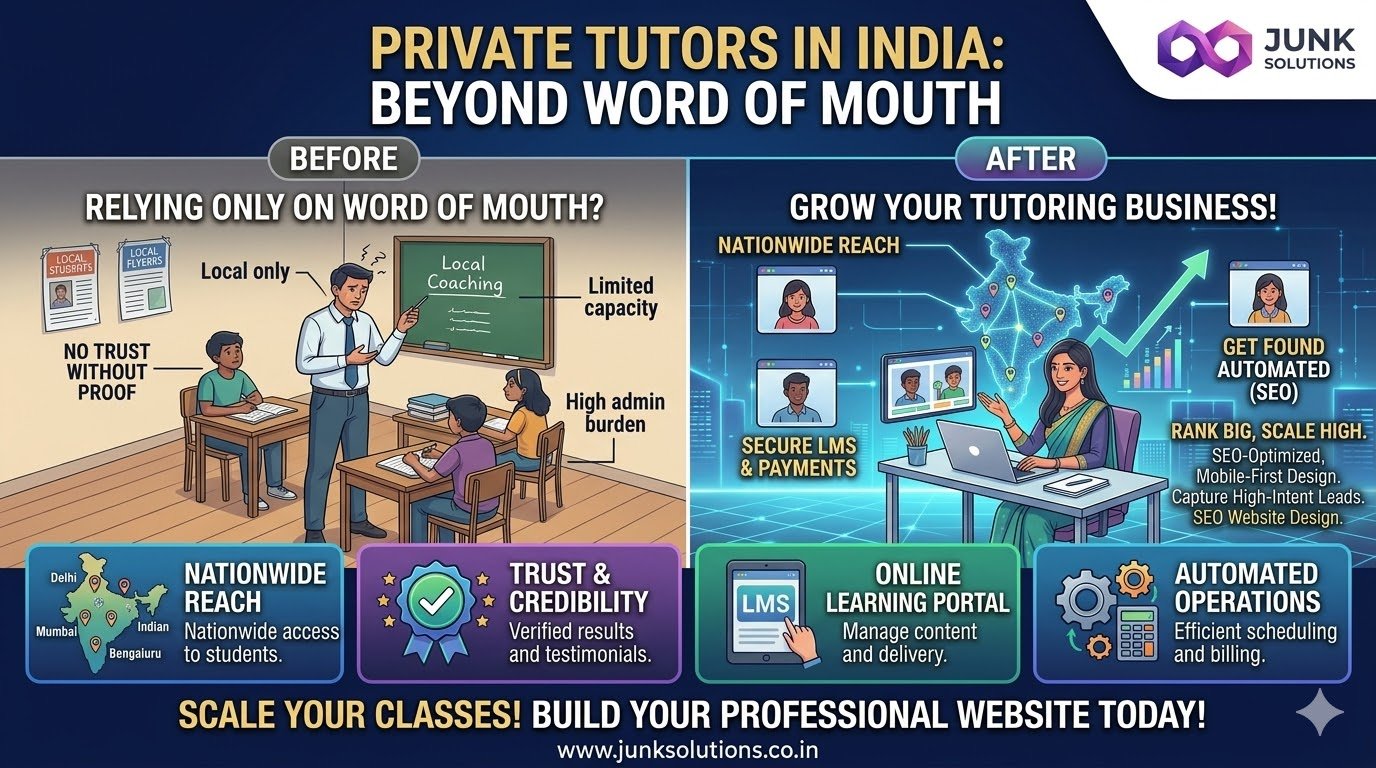
Historically, a coaching teacher’s growth was violently restricted by geography. Your income ceiling was determined by the physical capacity of your living room or the commercial space you could afford to rent, multiplied by the number of students living within a 10-kilometer radius. If you wanted to scale, you had to take on massive overhead costs: larger buildings, higher electricity bills, printed study materials, and administrative staff.
Today, the internet has entirely democratized educational distribution. A single educator has the power to reach thousands of eager learners simultaneously without ever leaving their home studio. Think about a highly specialized physics instructor who has mastered the art of preparing students for rigorous medical or engineering entrance exams. There might only be fifty students in their immediate local area who need that specific, advanced level of coaching. However, across the entire country, there are tens of thousands of students desperately searching for that exact expertise.
A professionally built website acts as the bridge to this massive, untapped audience. By investing in dedicated website development services, educators ensure their platform is purposefully engineered to handle this expanded reach. It means integrating seamless, high-definition video hosting, interactive whiteboards, and secure document delivery systems directly into a privately owned domain. When you own the platform, you dictate the rules. You are not constrained by the physical limits of a classroom. You can enroll a student from a tier-one metro city and a tier-three town into the exact same premium digital batch, drastically multiplying your revenue potential while keeping your overhead costs remarkably low.
Overcoming the Limitations of Free Tutor Aggregator Apps
Many educators attempt to start their digital journey by signing up for large, venture-backed tutoring aggregator platforms or marketplace apps. It seems like a logical first step—these platforms promise immediate access to a pool of students, and setting up a profile is usually free. However, the reality of these platforms is often a harsh awakening for high-quality, independent teachers.
These aggregator sites are designed to benefit the platform's bottom line, not yours. First and foremost, they commoditize your skills. You are placed in a massive directory next to hundreds of other tutors teaching the exact same subject. Because the student is browsing a catalog, the deciding factor almost always becomes price, forcing you into a frustrating "race to the bottom" where you must constantly lower your hourly rates just to get noticed. Secondly, these platforms take exorbitant commission fees—often ranging from 20% to 50% of your hard-earned tuition money.
Perhaps most dangerously, when you rely on an aggregator, you do not own your business. You do not own the student data. You usually are not allowed to capture their personal email addresses or phone numbers. If the platform decides to change its algorithm, increase its fees, or arbitrarily suspend your account, your entire student base and income stream vanish overnight. This is why transitioning to your own platform is an urgent necessity. When you partner with a professional website design company to build your own hub, 100% of the revenue stays in your bank account. You own the customer relationship, allowing you to nurture those students, upsell them into advanced crash courses, and rely on them for direct referrals year after year.
Building Trust and Authority as a Single-Subject Expert
In a sea of self-proclaimed experts and flashy marketing, genuine authority is the rarest and most valuable currency. When parents are looking for a tutor for their child, especially for complex subjects like advanced mathematics, biology, or chemistry, they are highly risk-averse. They are looking for an undeniable expert who can guarantee results.
Authority cannot simply be stated; it must be consistently demonstrated. A meticulously crafted website allows single-subject teachers to stage their expertise perfectly. Imagine a student struggling with a specific, complex chemistry equation. They perform a Google search and land on your website, where they find a beautifully formatted, deeply detailed blog post explaining that exact reaction, complete with custom diagrams and a short embedded video of you explaining the concept on a whiteboard. In that single interaction, you have moved from being a stranger to being a trusted mentor.
However, simply knowing your subject is not enough. The packaging of your knowledge matters immensely. If your website looks like it was built in 2010, loads painfully slow, and is riddled with broken links, visitors will subconsciously associate that low quality with your teaching abilities. This is where specialized educational website development becomes your greatest asset. Clean code, fast loading speeds, intuitive navigation, and a modern, academic aesthetic signal to both the user and to search engines that your platform is a highly authoritative resource. It elevates your brand from a casual "freelance tutor" to a premium "educational institution," allowing you to confidently charge the high-ticket fees that your expertise actually deserves.
Technical Foundations of a High-Converting Teaching Platform
Recognizing the philosophical need for a website is just the beginning. The actual execution—the underlying technology that powers your digital classroom—is what separates a hobbyist's blog from a highly profitable, scalable coaching business. In 2026, students expect a frictionless, Netflix-style experience when interacting with digital content. A website that merely acts as a static brochure with a phone number and an email address is woefully inadequate. You need a platform that actively works to convert traffic into sales, and then seamlessly delivers the educational product.
Essential Features of Online Learning Website Development
A high-converting tutor website must be a fully functional ecosystem. The core of this ecosystem is a robust Learning Management System (LMS). If you are attempting to manage a digital teaching business by manually sending out Zoom links via WhatsApp and emailing PDF worksheets, you will quickly hit an administrative wall. You will spend more time doing secretarial work than actual teaching.
Expert online learning website development solves this by automating the entire student journey. A proper LMS allows a student to visit your site, browse your available courses, and purchase access using localized, secure payment gateways (such as seamless UPI integrations, credit cards, or net banking). Once the payment is processed automatically, the student is instantly granted access to a personalized, secure dashboard.
Within this dashboard, the magic happens. The student can view their syllabus progress, watch pre-recorded high-definition video lectures, download secure study materials that cannot be easily pirated, and submit their homework assignments directly through the portal. They can take timed, automated quizzes that provide instant grading and feedback, saving you countless hours of manual checking. Furthermore, a professional LMS allows you to drip-feed content—meaning chapter two only unlocks after the student successfully passes the chapter one quiz. This structured, highly professional delivery method ensures students stay engaged, parents see tangible value, and your administrative headaches are completely eliminated.
Why Responsive and Mobile-Friendly Design is Non-Negotiable
We must be hyper-realistic about how students interact with the internet today. The desktop computer is no longer the primary device for learning. Students are revising notes on their smartphones while sitting on the bus. They are watching tutorial videos on iPads while lying on the couch. They are taking quick flashcard quizzes on their phones while waiting in line. The learning experience is entirely fragmented across multiple screens and devices.
If your educational platform does not adapt instantly and flawlessly to every single screen size, you are actively alienating the vast majority of your audience. This is exactly why investing in top-tier responsive website design services is an absolute, non-negotiable requirement. Responsive design is a coding approach that ensures your website’s layout, typography, images, and interactive elements dynamically reshape themselves based on the device accessing them. A button that is clicked with a mouse on a desktop must automatically resize to be easily tapped with a thumb on a smartphone.
Furthermore, from a purely business standpoint, a lack of mobile optimization will destroy your visibility. Search engines, primarily Google, have permanently shifted to "mobile-first indexing." This means Google uses the mobile version of your website to determine where you should rank in the search results. If you do not have a mobile friendly website design, Google will actively penalize your site, pushing it so far down the search rankings that no student will ever find you. Ensuring a seamless, lightning-fast mobile experience is not just about aesthetics; it is a critical survival tactic in the modern SEO landscape.
The Role of Dynamic Development in Student Engagement
A static HTML website is essentially a digital flyer. It displays information, but it cannot interact with the user. For an educational business, this is a fatal flaw. Education is inherently interactive. You need a platform that can process data, react to user inputs, and provide customized experiences in real-time.
This requires sophisticated dynamic website development. Dynamic websites utilize powerful backend databases and server-side scripting languages (like PHP, Python, or Node.js) to generate content on the fly. This is what allows a student to log in and see a dashboard customized specifically with their name, their course progress, and their upcoming live class schedules.
Dynamic architecture is also what powers crucial business features like automated booking calendars. Instead of playing email tag with a parent to schedule a demo class, a dynamic site allows them to view your real-time availability, select an open slot, and book it instantly, triggering automated confirmation emails and calendar invites to both parties. It allows for dynamic pricing models, where you can offer limited-time discount codes during exam seasons. By leveraging comprehensive website design and development services to build a dynamic, database-driven platform, you create a deeply engaging, professional environment that keeps students actively returning to your site day after day.
Scaling Your Tutoring Business with Strategic SEO and Marketing
Building a state-of-the-art, visually stunning, and highly functional website is only 50% of the battle. The most beautiful digital classroom in the world is completely useless if the seats are empty. Once your platform is built, your primary objective shifts entirely to traffic generation. However, paying for ads on Google or social media can quickly drain a single tutor's budget, especially in highly competitive educational niches. The key to sustainable, high-margin growth is organic visibility.
SEO Website Design: Getting Found by High-Intent Students
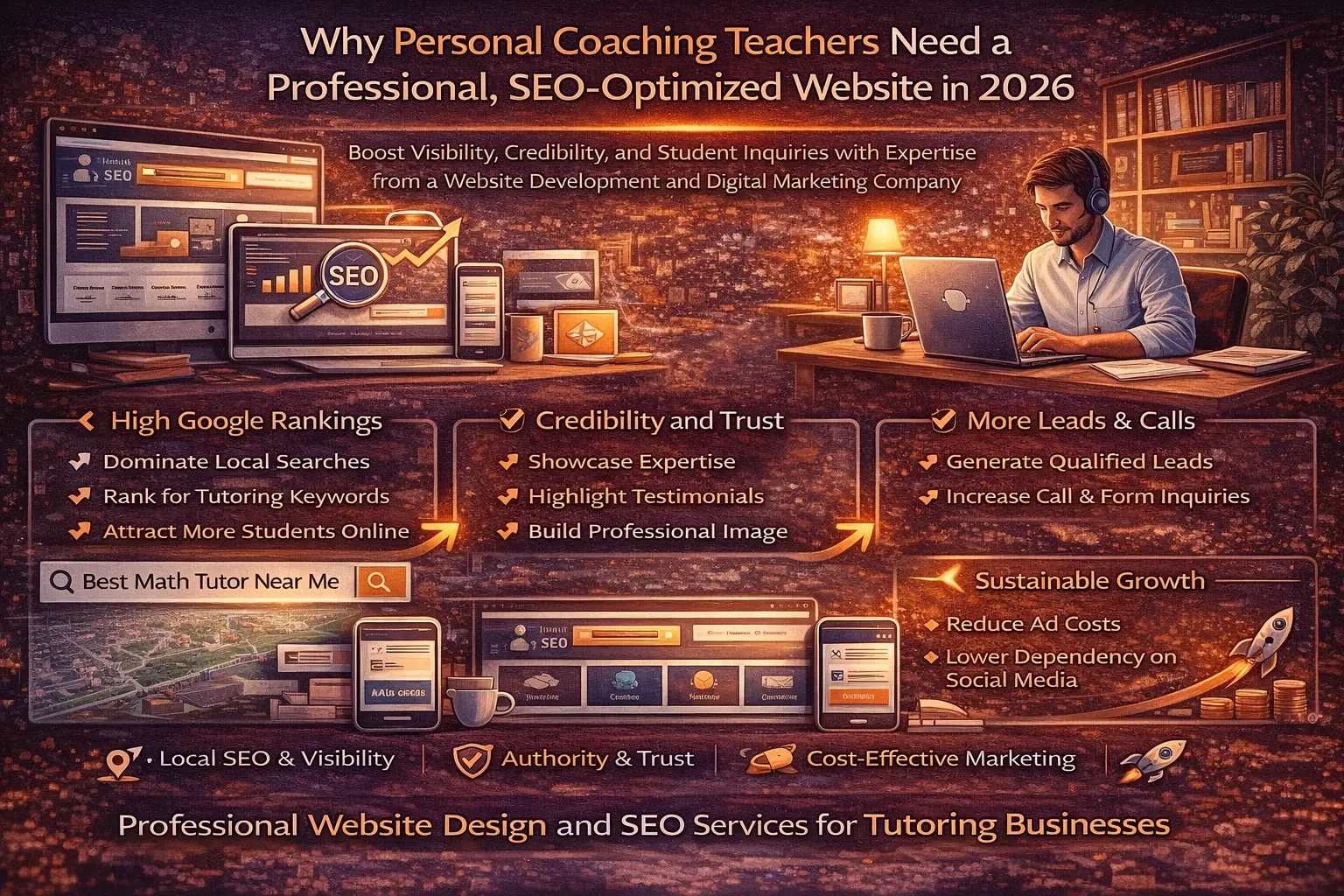
Search Engine Optimization (SEO) is often misunderstood as a marketing tactic applied after a website is built. In reality, true SEO must be engineered into the very foundation of the site. When a stressed student types "best organic chemistry teacher online" or "advanced physics numericals tutor," they have incredibly high commercial intent. They are looking for a solution right now, and they are ready to enroll.
Capturing this highly lucrative traffic requires partnering with a team that specializes in small business website design and development with a heavy emphasis on search visibility. This integrated approach is often called SEO web design. It means that before a single line of code is written, extensive keyword research is conducted to understand exactly what your target students are searching for.
Your site's architecture is then built around these keywords. The URLs are clean and descriptive. The header tags (H1, H2, H3) are perfectly structured to guide search engine crawlers through your content. The website's code is minified and optimized to ensure incredibly fast server response times—because Google aggressively penalizes slow-loading sites. Furthermore, an expert developer will implement advanced schema markup. This is hidden code that explicitly tells Google, "This page is an educational course," or "This page is a local business," allowing you to show up in rich snippets and local map packs. By investing in professional web development for education that prioritizes technical SEO, you transform your website from a passive digital brochure into an aggressive, automated lead-generation engine that pulls in qualified students around the clock.
Choosing the Right Development Partner for Long-Term Success
Transitioning your teaching practice into a digital empire is a significant business maneuver. It requires treating your tutoring practice as a serious enterprise. Just as you would tell a struggling student that they need an expert teacher to master a difficult subject, you must recognize that you need expert developers to master your digital infrastructure.
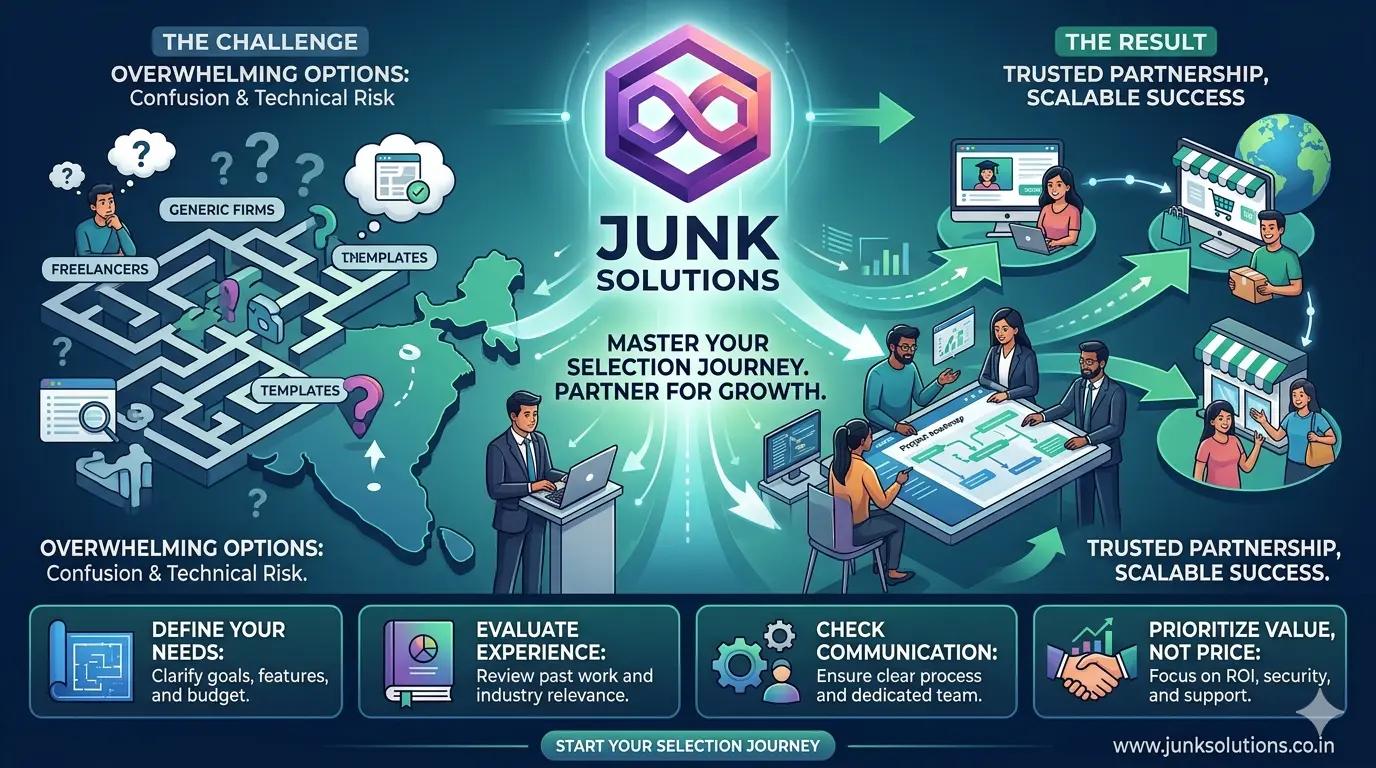
The market is flooded with cheap freelancers and drag-and-drop website builders promising overnight success. Choosing these options almost always results in technical debt. You end up with a clunky, slow, and unscalable website that breaks the moment you try to add 100 new students to a batch. When your site goes down right before a major board exam, your reputation is the one that suffers, not the freelancer's.
You need to partner with an experienced website development company for small business. You need a team that doesn't just know how to make things look pretty, but actually understands server architecture, database management, and the specific security protocols required to protect student data and prevent your premium video lectures from being pirated. Look for a dedicated education website developer who acts as a strategic consultant. They should take the time to deeply understand your specific teaching methodology, your target demographic, and your revenue goals before they suggest a technical stack.
Ultimately, the most powerful move an independent educator can make is to hire a unified website development and digital marketing company. This holistic approach ensures absolute synergy. The development team builds lightning-fast landing pages specifically designed to convert the traffic generated by the SEO and digital marketing teams. The content writers work directly with the backend coders to ensure every new blog post is perfectly optimized and structured. This eliminates the frustrating communication gaps that occur when you hire separate agencies for different tasks. By securing this level of professional, integrated support, personal tutors and single-subject teachers can confidently step out of the shadows of local coaching centers and establish themselves as dominant, highly profitable authorities in the 2026 digital education landscape.
Frequently Asked Questions (FAQs)
1. Why is developing a web presence for a business strictly necessary for a single-subject tutor? Developing a web presence allows you to break free from local geographic constraints and the high commission fees of third-party platforms. It establishes your independent authority, allows you to own your student data, and lets you market your specific subject expertise to a national or global audience seamlessly.
2. What is the fundamental difference between standard web design and educational website development? Standard web design focuses on creating digital brochures for general businesses. Educational web development is highly specialized; it integrates complex tools like Learning Management Systems (LMS), secure video hosting to prevent piracy, interactive assignment portals, and student progress dashboards.
3. How does a professional website development company actually help me increase my student enrollments? A professional company builds a technically flawless, fast, and highly secure platform engineered for SEO. This ensures your site ranks on the first page of Google, driving high-intent organic traffic to beautifully designed landing pages that are strategically built to convert casual visitors into paying students.
4. Why are responsive website design services considered non-negotiable for online teachers today? The vast majority of modern students access course materials, watch lectures, and read notes on their smartphones and tablets. Responsive design guarantees that your website automatically adapts to provide a perfect, easy-to-navigate experience on any screen size, preventing frustration and high bounce rates.
5. Can I just build my educational site myself using a cheap DIY website builder? While technically possible, DIY builders produce bloated code, slow loading times, and rigid templates. As your student base grows, these sites often crash or fail to support complex features like live quizzes and automated billing. Partnering with a small business website design and development agency ensures a custom, scalable platform.
6. What specific role does dynamic website development play in my day-to-day tutoring? Dynamic development allows your website to interact with users in real-time. It powers essential operational features like live appointment booking calendars, personalized student login portals, interactive testing with instant grading, and automated email communications based on user behavior.
7. Why is a mobile friendly website design a critical factor for Google search rankings? Google utilizes a system called mobile-first indexing, meaning it predominantly evaluates the mobile version of your site to determine its ranking position. If your tutor website is not optimized for mobile devices, it will be severely penalized and pushed down the search results.
8. What specific e-learning features should an education website developer include on my site? An expert developer must include localized payment gateways (like UPI/Razorpay for India or Stripe globally), an integrated LMS, automated scheduling tools, secure document delivery systems, and comprehensive analytics dashboards to monitor student engagement and video retention rates.
9. Is hiring a website development company for small business genuinely affordable for an independent tutor? Yes. Specialized agencies focused on small businesses offer scalable, modular solutions. This means you get enterprise-level security and performance tailored to your current budget, providing an incredibly high return on investment as your commission-free enrollments increase.
10. What is the core advantage of using a unified website development and digital marketing company? A unified agency ensures that your website's technical architecture is perfectly aligned with your ongoing marketing and SEO strategies. This prevents communication breakdowns and ensures a seamless, highly optimized funnel from the very first Google search directly to the final course purchase.